AI & Travel Discovery: Victorian Tourism Conference Recap

By Adrian
Fastrack Digital Managing Director Adrian Caruso shares what tourism businesses need to do now to stay visible as travellers increasingly turn to AI to research, plan and book.
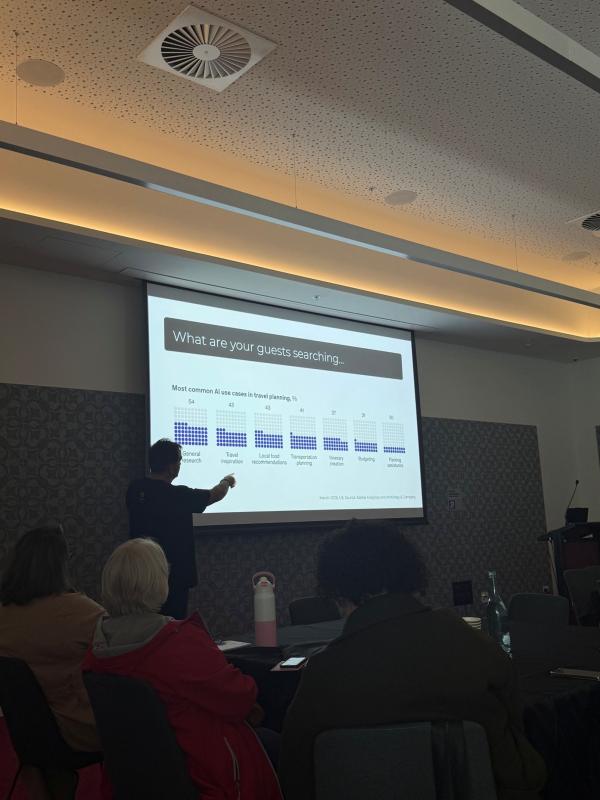
Fastrack Digital Founder and Managing Director Adrian Caruso recently presented at the Victorian Tourism Conference 2026, sharing his session, “Staying Visible in a Changing Digital Landscape: What It Means for Visitation & Direct Bookings.”
The presentation explored one of the biggest changes facing tourism today: the rapid shift in how travellers discover destinations, accommodation, attractions and experiences.
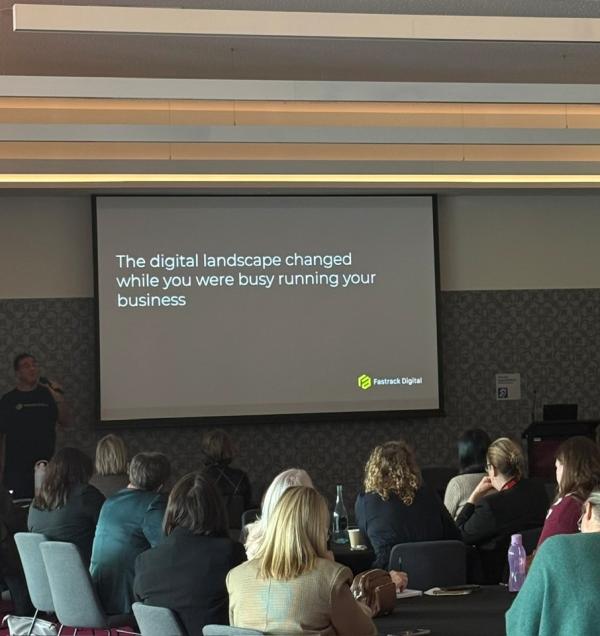
For more than two decades, tourism businesses have focused heavily on being found through Google. SEO, paid search, social media and a high-performing website remain essential, but AI-powered platforms such as ChatGPT and Google AI are creating an entirely new discovery journey.
Here are five of the key takeaways Adrian shared with Victoria’s tourism industry.
1. Travel discovery is moving from “search and choose” to “ask and receive”
Traditionally, someone planning a holiday might search Google, visit multiple websites, read reviews, compare options and eventually decide where to stay or what to do.
AI is changing that journey.
A traveller can now ask:
“What are the best things to do near Ballarat for a family with young children?”
Rather than presenting pages of search results, an AI platform can provide a small number of specific recommendations.
That difference is significant.
Traditional search helps travellers find options. AI increasingly selects and recommends those options for them.
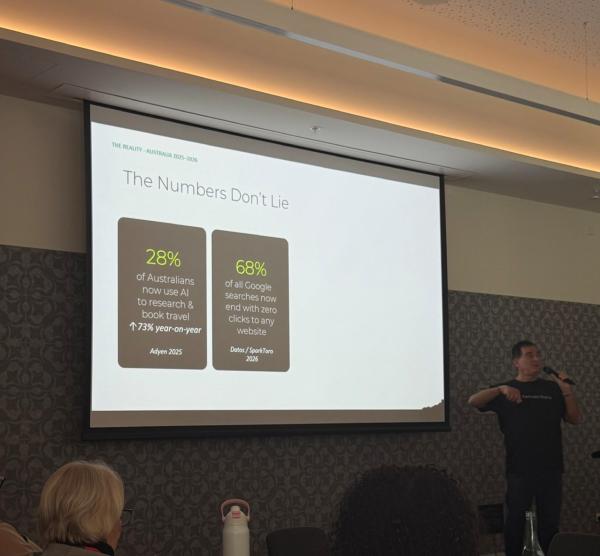
Adrian highlighted that 28% of Australians are already using AI to research and book travel, with usage growing rapidly. At the same time, Google is incorporating AI directly into its search experience through AI Overviews and AI Mode.
For tourism businesses, this means being visible on traditional Google search alone is no longer enough.
2. SEO isn't disappearing – it's evolving into SEO + GEO
One of Adrian's key messages was not to abandon SEO.
Strong SEO remains the foundation of online visibility, but businesses increasingly need to think about Generative Engine Optimisation (GEO) as well.
SEO is primarily about helping your website rank in traditional search results. GEO focuses on helping AI platforms understand, trust, cite and recommend your business within generated answers.
The way people search is also becoming far more conversational.
Instead of searching:
“luxury accommodation Melbourne”
someone might ask:
“Where should we stay in Melbourne for a romantic weekend within walking distance of restaurants and close to the MCG?”
This means tourism websites need to provide clearer and more detailed answers to the questions travellers genuinely ask.
SEO and GEO aren't competing strategies. Businesses increasingly need both.
3. Your website needs to become AI-ready
Your website remains one of your most important digital assets, but it's no longer being read only by potential customers.
AI platforms also need to crawl, interpret and understand it.
Adrian recommended tourism businesses consider creating an AI-ready page that brings together clear information about the business, including location, accommodation or experiences offered, pricing, opening hours, accessibility, nearby attractions, facilities and frequently asked questions.
Specific information is particularly important.
Rather than simply saying your property is “conveniently located”, explain that it is “15 minutes from the MCG.”
Instead of describing an attraction as “family friendly”, explain which ages it suits, what families can do there, how long they should allow and what facilities are available.
Structured data and schema markup also help search engines and AI platforms understand exactly what your business offers.
The objective is simple: make it as easy as possible for both people and AI to understand why your business is relevant to a particular traveller.
4. Trust, reviews and digital PR matter more than ever
AI doesn't only consider what you say about yourself.
It can draw upon information from across the web to decide which businesses are credible enough to recommend.
That makes your broader digital reputation increasingly important.
Reviews are a major part of this. Tourism businesses should be actively encouraging customers to leave genuine, detailed reviews and consistently responding to them.
Digital PR is also taking on a new role.
Being featured in trusted media, tourism websites, travel guides, regional tourism organisation websites, awards programs and reputable industry publications doesn't simply create awareness and backlinks. These third-party mentions can help reinforce the authority and credibility surrounding your brand.
For tourism businesses, PR, SEO, GEO, reviews and content can no longer be treated as completely separate activities. Together, they help create the digital signals AI platforms use to understand and potentially recommend a business.
5. Start measuring your AI visibility now
Perhaps the most important message from Adrian's presentation was not to wait.
Tourism businesses should start understanding how they currently appear across AI-powered platforms.
A simple starting point is to search for the types of questions your potential customers might ask.
For example:
“What are the best wineries to visit near Rutherglen?”
“Where should a family stay on the Great Ocean Road?”
“What are the best luxury weekend getaways from Melbourne?”
Does your business appear? Which competitors are being recommended? What sources are AI platforms using to make those recommendations?
Adrian finished his presentation with five practical actions businesses can start implementing:
- Search for your business and category using AI.
- Create an AI-ready page answering common traveller questions.
- Add appropriate structured data and schema.
- Review and optimise your Google Business Profile.
- Build review generation into the customer journey.
A major opportunity for Victorian tourism
The shift towards AI-powered travel discovery creates an enormous opportunity, particularly for independent tourism businesses and regional destinations.
AI visibility isn't necessarily determined by who has the biggest advertising budget.
A regional accommodation provider, attraction, tour operator, winery or restaurant with excellent content, strong reviews, accurate structured information and trusted third-party mentions can potentially be recommended alongside much larger brands.
But businesses need to start adapting now.
As Adrian told delegates at the Victorian Tourism Conference:
“If AI can't find you, no-one can.”
The next phase of tourism marketing isn't simply about ranking higher on Google. It's about ensuring your business can be found, understood, trusted, recommended and ultimately booked wherever travellers choose to search.
How AI-visible is your tourism business?
Fastrack Digital is helping hotels, accommodation providers, attractions, tour operators, regional tourism organisations and other tourism businesses understand how visible they are across AI-powered search.
Our AI Discoverability Audit identifies whether your business is appearing for relevant traveller searches, where competitors are being recommended instead and the areas that need improvement across your website, SEO/GEO, content, reviews and digital authority.
Want to know how visible your tourism business is to AI? Talk to the Fastrack Digital team about an AI Discoverability Audit.