From SEO to GEO: How Hotels Can Stay Visible in the Age of AI Travel Search

By Adrian
The way travellers discover hotels is changing rapidly.
For more than two decades, travel discovery has largely been driven by traditional search engines like Google. Travellers would search for destinations, browse multiple websites, compare hotels and eventually make a booking.
Today, that process is evolving.
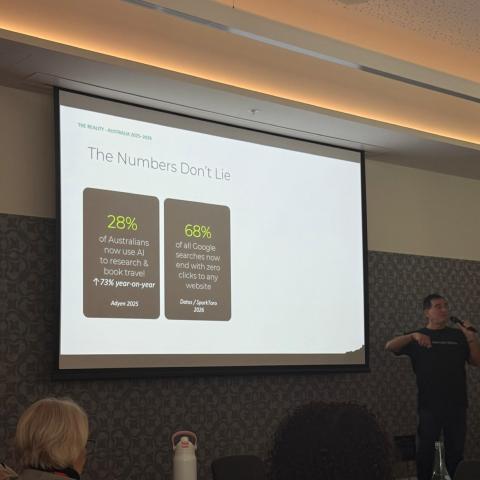
Increasingly, travellers are using AI-powered platforms such as ChatGPT, Perplexity and Google’s AI experiences to research destinations and accommodation.
Instead of scrolling through pages of search results, travellers now ask questions such as:
-
“What are the best boutique hotels in a beach town in Spain?”
-
“Where should I stay in Queenstown with great lake views?”
-
“Top luxury wellness retreats in Australia.”
AI platforms then generate personalised recommendations based on information they gather from across the web.
For hotels, this shift is significant.
Because AI tools can only recommend properties that they can find, understand and trust online.
If your hotel’s information is unclear, outdated or poorly structured across the web, AI platforms may not include your property in their recommendations.
This is where Generative Engine Optimisation (GEO) comes in.
What Is GEO?
Generative Engine Optimisation (GEO) refers to strategies designed to ensure your brand is visible within AI-generated responses and recommendations.
While traditional Search Engine Optimisation (SEO) focuses on ranking your website in search results, GEO focuses on ensuring AI systems can understand, reference and recommend your brand when travellers ask questions.
For hotels, this means optimising not only for Google but also for the rapidly growing ecosystem of AI-powered discovery platforms.
Four Ways Hotels Can Improve AI Discoverability
1. Conduct an AI Discoverability Audit
The first step is understanding how your byusiness currently appears in AI-generated travel results.
Click here for a free AI-Audit
By analysing how platforms like ChatGPT or Perplexity respond to common travel queries, hotels can determine:
-
Whether their property is mentioned
-
Which competitors are appearing instead
-
What sources AI is referencing
-
Where content gaps exist
An AI Discoverability Audit helps identify opportunities to improve visibility in AI search results.
2. Optimise Your Website for AI
Your website remains one of the most important sources of information for AI platforms.
AI models prioritise content that is:
-
Clear and descriptive
-
Factually accurate
-
Structured and easy to understand
-
Updated regularly
Hotels should ensure their website includes:
-
Detailed descriptions of rooms, facilities and experiences
-
Destination and local area information
-
FAQ-style content that answers traveller questions
-
Clean technical structure with no broken links or errors
The easier your website is for AI to interpret, the more likely it is to be referenced.
3. Strengthen Your Digital Authority
AI platforms often rely on trusted third-party sources when generating recommendations.
These sources include:
-
Travel publications
-
Editorial features
-
Tourism organisation websites
-
Reputable blogs and travel guides
The more your hotel appears across credible websites and industry publications, the stronger its authority becomes in AI-generated responses.
This is why PR, partnerships and content distribution are becoming increasingly important in the AI era.
4. Monitor and Adapt
AI search is evolving rapidly.
Models are constantly updating, and the sources used to generate responses may change over time.
For hotels, this means GEO should be viewed as an ongoing strategy rather than a one-off task.
Regular monitoring allows hotels to track how their brand appears in AI platforms and adjust their content strategy accordingly.
The Future of Travel Discovery
Search is undergoing its most significant transformation since the emergence of modern search engines.
AI is simplifying the travel planning process by delivering personalised recommendations quickly and conversationally.
For travellers, this means easier trip planning.
For hotels, it creates a new opportunity to appear directly within the recommendations travellers rely on when choosing where to stay.
However, success in this new environment requires a proactive approach.
Hotels that optimise their digital presence for AI discoverability will gain a competitive advantage in visibility and bookings.
Those that don’t risk being overlooked entirely.
The Key Question for Hotel Marketers
As AI increasingly shapes travel planning, hotel marketing teams should be asking themselves one important question:
When travellers ask AI where to stay, will your hotel be recommended?
Because in an AI-first travel world:
If AI can’t find you, no one can.
For a Free AI-Discoverability Audit of your brand and website to see how visibible it is, click here.